The detection and analysis of atmospheric molecules are increasingly important as industries address air quality, climate change, and process purity. In high-tech manufacturing—especially semiconductor production – Airborne Molecular Contamination (AMC) presents a critical challenge.
These airborne contaminants can affect product quality, introduce defects, and reduce manufacturing yield. They may also impact the performance and lifespan of sensitive production equipment, increasing operational costs if not properly controlled.
Monitoring AMC helps manufacturers maintain cleanroom integrity, protect equipment, and ensure consistent product performance. It also supports environmental responsibility by helping identify and manage molecular contaminants that could be released into the atmosphere.
We’re here to help.
Process Insights provides reliable, high-precision gas analysis technologies designed to meet your application and budget requirements—delivering stable, dependable solutions for your process monitoring needs.
APPLICATION SUPPORT
Allow our Support Team, consisting of Factory Trained and Certified professionals, to assess your application and specific requirements. We acknowledge that external conditions can lead to changes in your process parameters, necessitating the addition of components to an existing stream or the incorporation of a new stream. In response to this, we provide a wide range of cost-effective turnkey solutions that deliver exceptional performance, catering to your unique application needs. Explore our Application Support.


SALES | TRAINING INQUIRIES
AMERICAS: info.americas@process-insights.com
EMEAI (includes India): info.emeai@process-insights.com
APAC: info.apac@process-insights.com
CHINA: info.cn@process-insights.com


Simultaneously Monitor HF, HCl, and NH3 in Real-Time
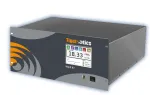
T-I MAX X3 AMC Monitoring Solution
Next-Generation Trace Gas Analyzers for Detection & Continuous Monitoring of Airborne Molecular Contaminants in Semiconductor Cleanrooms, FOUP Cleaning Tools, Reticle Nests and Sub Fab Environments. You can spend a long time “looking” for Airborne Molecular Contaminants (AMCs) when the catastrophic product performance or yield loss is discovered at your device final test stage; or you can deploy our TIGER OPTICS™ T-I Max™ Series analyzers to locate and to monitor these invisible defect generators, commonly found lurking in and around equipment, personnel, wafer carriers and cleanroom bays.


MOBILE AMC MONITORING
CRDS (Cavity Ring-Down Spectroscopy) is a highly sensitive technique that can detect a wide range of atmospheric trace gases and airborne molecular contaminants (AMCs). The method uses the principles of absorption spectroscopy to measure the concentration of molecules in a gas sample. With high precision, sensitivity and specificity, our TIGER OPTICS™ Cavity Ring-Down Spectroscopy (CRDS) gas analyzer is one of the best analytical methods available to monitor contaminants, pollutants and greenhouse gases, without interference from moisture and other atmospheric constituents. Gain continuous measurements easily with little or no maintenance and few consumables.
Exposure of wafers to Airborne Molecular Contaminants (AMCs) is a great concern to semiconductor manufacturers, which can cause yields to drop. Our CRDS technology makes measurements easy and free of interferences from other contaminants.
Options Available
- Standalone
- Rack-mounted AMC Combo (HCl/HF, HCl/NH3 or HF/NH3)
- AMC Mobile GO-cart™ (with up to three analyzers)
APPLICATIONS
- Semiconductor Industry AMC Monitoring
- Cleanroom air
- Front Opening Unified Pods (FOUPs)
- Silicon wafers
- Continuous monitoring of air quality pollutants in other microelectronics manufacturing
- Continuous and precise measurement of Greenhouse Gas (GHG) monitoring

Multi-Max AMC Monitoring Solution
You can spend a long time looking for Airborne Molecular Contaminants (AMCs) when the catastrophic product performance or yield loss is discovered at your device final test stage; or you can deploy our Multi-Max™ AMC Monitoring Solution to locate and to monitor these invisible defect generators, commonly found lurking in and around equipment, personnel, wafer carriers, and cleanroom bays.
In today’s advanced semiconductor processing, the residual gases, vapors and chemicals emanating from the various materials, accelerated processing operations, and substrate storage and transport have become a critical concern. The International Technology Roadmap for Semiconductors (ITRS) now highlights AMC contamination as a key technical challenge in achieving and sustaining low defect rates on devices.
With a particular focus on the major contributors to the “chemical contamination” element of AMCs, our Multi-Max AMC Monitoring combines our T-I Max series CRDS analyzers that can detect and continuously monitor HF, HCl, and NH3 with an unprecedented combination of sensitivity, selectivity, and speed of response. Our AMC Monitoring Solution delivers the flexibility, accuracy and reliability you need.
Benefits
- Surveying different micro-environments in a fab is now fast and easy with our safe, flexible, and easy to use Multi-Max AMC Monitoring Solution.
- Can be equipped with any combination of our T-I Max CRDS analyzers to monitor simultaneously and in real-time for the most critical contaminants in cleanroom air: NH3, HCl, and HF (other analytes available as well).
- All our analyzers come with a compact, low-power, fanless vacuum pump optimized for cleanroom operation.

Tiger Optics UHP gas analyzers WITH crds tECHNOLOGY
CQC / IQC Cabinet Total Monitoring Solution

VeraSpec™ APIMS

GO-cart™ for AMC Monitoring

GO-cart™ for Analytical Monitoring

HALO Max QCL™ CO2

HALO Max QCL™ CO
HALO KA™ H2O

HALO KA Max™ CH4

HALO KA Max™ H2O

HALO KA Max™ NH3

T-I Max EtO™

HALO™ 3 CH2O

HALO™ 3 CO

HALO™ 3 CO2
HALO™ 3 D2O/HDO

HALO™ 3 H2O

HALO™ 3 CH4

HALO™ 3 HCl

HALO™ 3 NH3

HALO 3 HF

HALO™ H2
HALO™ H2O in N2O

HALO™ OK/OK+

HALO™ LP H2O

HALO™ RP

HALO™ QRP
Spark™ H2O

Spark™ H2O in CO2

Spark™ CH4

Spark™ C2H2

Spark™ CO2

Spark+™ CO

Spark Max™ CO2

Prismatic 3™

Prismatic 3+™
T-I MAX™ AIR GHG

T-I MAX X3

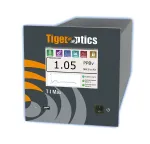
T-I MAX™ HCl

T-I MAX™ HF

T-I MAX™ NH3
T-I MAX™ CEM

CO-REKT™

ALOHA+H2O™

our brands

















APPLICATIONS FOR OUR TECHNOLOGIES


