Traditional COD testing requires hazardous reagents, lengthy digestion cycles, and extensive laboratory preparation. These methods increase operating costs, generate chemical waste, and delay critical wastewater decisions.
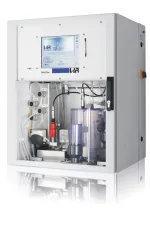
The LAR™ QuickCODlab™ is a laboratory Chemical Oxygen Demand (COD) analyzer that uses patented 1,200°C thermal oxidation to directly determine COD without potassium dichromate, sulfuric acid, mercury, or other hazardous reagents. Results are available in approximately three minutes, allowing laboratories to improve productivity while delivering accurate and repeatable wastewater measurements.
Why Choose QuickCODlab?
Benefits
- COD results in approximately 3 minutes
- No hazardous reagents
- No potassium dichromate
- No mercury salts
- No sulfuric acid
- No chloride interference
- High-temperature thermal oxidation (1,200°C)
- Simple operation
- Lower laboratory operating costs
- Reduced hazardous waste disposal
- Improved laboratory safety
- High repeatability
- Low maintenance
- Ideal for industrial wastewater laboratories
Why Replace Traditional COD Testing?
Traditional dichromate methods require:
- Hazardous chemicals
- Digestion blocks
- Two-hour digestion
- Acid handling
- Chemical disposal
- Extensive operator involvement
The QuickCODlab™ eliminates these challenges by using direct thermal oxidation rather than wet chemistry.
Benefits include:
- Faster analysis
- Safer laboratory environment
- Lower reagent costs
- Reduced hazardous waste
- Higher sample throughput
- Simplified workflow
OPTIONS
- Autosampler
HOUSINGS
- IP54 (Standard)
APPLICATIONS


EXPLORE WATER ANALYSIS APPLICATIONS
SALES | TRAINING INQUIRIES
AMERICAS: info.americas@process-insights.com
EMEAI (includes India): info.emeai@process-insights.com
APAC: info.apac@process-insights.com
CHINA: info.cn@process-insights.com

How the QuickCODlab Works
Step 1 – Inject the Sample
A small water sample is introduced into the analyzer.
Step 2 – High-Temperature Oxidation
Organic compounds are completely oxidized at approximately 1,200°C.
Step 3 – Direct COD Measurement
The resulting gases are measured to determine Chemical Oxygen Demand accurately and rapidly.
Unlike conventional COD testing, no hazardous digestion chemicals are required.

Why COD Matters
Chemical Oxygen Demand is one of the most important indicators of wastewater quality.
Monitoring COD helps facilities:
- Optimize treatment
- Reduce operating costs
- Detect process upsets
- Improve water quality
- Meet environmental regulations
- Improve process efficiency
Frequently Asked Questions
What is Chemical Oxygen Demand (COD)?
Chemical Oxygen Demand (COD) measures the amount of oxygen required to chemically oxidize contaminants in water. It is widely used to evaluate industrial wastewater quality and treatment efficiency.
What makes the QuickCODlab different?
Unlike traditional laboratory COD analyzers, the QuickCODlab™ uses 1,200°C thermal oxidation instead of hazardous chemical digestion. This eliminates reagents, reduces analysis time, and minimizes hazardous waste.
How long does a COD test take?
Traditional COD testing often requires around two hours of digestion. The QuickCODlab™ provides results in approximately three minutes, significantly increasing laboratory throughput.
Does the QuickCODlab hazardous chemicals?
No. The analyzer performs reagent-free COD analysis and does not require potassium dichromate, sulfuric acid, or mercury salts during routine operation.

Reliable TRUE TOC COD BOD & Water Analyzers for Every Industry and Every Type of Water
QuickTOCultra™ TRUE TOC Water Analyzer using High Temperature Method

QuickTONultra™ TNb Water Analyzer with Chemiluminescence Technology
QuickCODultra™ COD Water Analyzer using UV-Activated Persulfate
QuickTOCairport™ Run-Off Deicing Water Analyzer for airport water applications
QuickCODlab™ COD Lab Water Analyzer for Laboratories

BioMonitor™ Online Toximeter for Organic or Inorganic Compounds BOD

Nitritox™ Online Toximeter for Measuring Toxicity in Water

ToxAlarm™ Online Toximeter for Municipal Water Treatment, Industrial Wastewater Monitoring & Environmental Protection