Methane contamination can compromise ultra-high-purity gases, reduce semiconductor yields, affect specialty gas quality, and interfere with critical manufacturing processes. The TIGER OPTICS™ HALO KA Max™ CH₄ uses advanced Continuous-Wave Cavity Ring-Down Spectroscopy (CRDS) to continuously measure methane at concentrations as low as 500 parts per trillion (ppt). Designed for semiconductor manufacturing, industrial gas production, specialty gases, and research applications, the HALO KA Max CH₄ delivers exceptional sensitivity, rapid response, and drift-free performance without routine calibration gases. Contact us today for more details.
Why Choose the HALO KA Max CH₄?
The HALO KA Max CH₄ combines industry-leading CRDS technology with a compact Max-series platform to provide reliable methane measurements in demanding high-purity gas applications.
Benefits
- Methane detection down to 500 ppt
- Continuous online monitoring
- Calibration-free optical measurement
- Built-in zero verification
- Fast response to contamination events
- Drift-free long-term stability
- Wide dynamic range
- Compact rack-mount design
- Low maintenance
- Low total cost of ownership
With fast installation, simple operation, and virtually maintenance-free performance, the HALO KA Max CH₄ empowers semiconductor manufacturers to maintain ultra-high purity standards for methane contamination—essential for reducing defects and improving process yield.
Key Features
- Parts per trillion (ppt) methane detection capability in an array of gases
- Absolute measurement (freedom from calibration)
- Field proven lowest Cost of Ownership and ease of use
- Wide dynamic range—over four orders of magnitude
- Unprecedented speed of response
- Compact footprint (two Halo KA Max fit in a 19” rack)
Typical Gases Measured
The HALO KA Max™ CH₄ supports trace methane analysis in numerous gas matrices, including:
- Nitrogen (N₂)
- Hydrogen (H₂)
- Oxygen (O₂)
- Argon (Ar)
- Helium (He)
- High-purity process gases
- Specialty gases
- Bulk gases
DETECTION CAPABILITY
| Detection and Matrix | Range | LDL (3σ) | Precision (1σ) @ zero |
|---|---|---|---|
| CH4 in N2 | 0 – 8 ppm | 500 ppt | 200 ppt |
| CH4 in He | 0 – 5 ppm | 400 ppt | 140 ppt |
| CH4 in Ar | 0 – 7 ppm | 450 ppt | 150 ppt |
| CH4 in H2 | 0 – 8 ppm | 500 ppt | 200 ppt |
| CH4 in O2 | 0 – 7 ppm | 500 ppt | 200 ppt |
SPECIFICATIONS
| Performance | |
|---|---|
| Operating range | See Detection Capability table |
| Detection Limit (3σ/24h) | See Detection Capability table |
| Precision (1σ, greater of) | ± 0.75% or 1/3 of LDL |
| Accuracy (greater of) | ± 4% or LDL |
| Speed of response | < 1 minute to 95% |
| Environmental conditions | 10°C to 40°C, 30% to 80% RH (non-condensing) |
| Storage temperature | -10°C to 50°C |
| Gas Handling System and Conditions | |
| Gas connections | 1/4” male VCR inlet and outlet |
| Leak tested to | 1 x 10⁻⁹ mbar l / sec |
| Inlet pressure | 10 − 125 psig (1.7 − 9.6 bara) |
| Flow rate | ∼2 slpm in N2 (gas dependent) |
| Sample gases | See Detection Capability table |
| Gas temperature | Up to 60°C |
| Dimensions, H x W x D | |
| Standard sensor | 8.73″ x 8.57″ x 23.6″ (222 mm x 218 mm x 599 mm) |
| Sensor rack (fits up to two sensors) | 8.73″ x 19.0″ x 23.6″ (222 mm x 483 mm x 599 mm) |
| Weight | |
| Standard sensor | 28 lbs (12.7 kg) |
| Electrical and Interfaces | |
| Platform | Max series analyzer |
| Alarm indicators | 2 user programmable, 1 system fault, Form C relays |
| Power requirements | 90 − 240 VAC, 50/60 Hz |
| Power consumption | 40 Watts max. |
| Signal output | Isolated 4−20 mA |
| User interfaces | 5.7” LCD touchscreen, 10/100 Base-T Ethernet |
| USB, RS-232, RS-485, Modbus TCP (optional) | |
| Data storage | Internal or external flash drive |
| Certification | CE Mark |
| Patents | |
| U.S. Patent #7,277,177 | |
*The Detection limit (LDL) is defined as 3σ over 24h or the H2O drydown limit, whichever is higher


SALES | TRAINING INQUIRIES
AMERICAS: info.americas@process-insights.com
EMEAI (includes India): info.emeai@process-insights.com
APAC: info.apac@process-insights.com
CHINA: info.cn@process-insights.com

TIGER OPTICS | ultra high purity gas moisture analyzers
CQC / IQC Cabinet Total Monitoring Solution

VeraSpec™ APIMS

GO-cart™ for AMC Monitoring

GO-cart™ for Analytical Monitoring

HALO Max QCL™ CO2

HALO Max QCL™ CO
HALO KA™ H2O

HALO KA Max™ CH4

HALO KA Max™ H2O

HALO KA Max™ NH3

T-I Max EtO™

HALO™ 3 CH2O

HALO™ 3 CO

HALO™ 3 CO2
HALO™ 3 D2O/HDO

HALO™ 3 H2O

HALO™ 3 CH4

HALO™ 3 HCl

HALO™ 3 NH3

HALO 3 HF

HALO™ H2
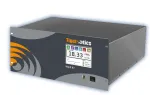
HALO™ H2O in N2O

HALO™ OK/OK+

HALO™ LP H2O

HALO™ RP

HALO™ QRP
Spark™ H2O

Spark™ H2O in CO2

Spark™ CH4

Spark™ C2H2

Spark™ CO2

Spark+™ CO

Spark Max™ CO2

Prismatic 3™

Prismatic 3+™
T-I MAX™ AIR GHG

T-I MAX X3

T-I MAX™ HCl

T-I MAX™ HF

T-I MAX™ NH3
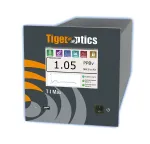
T-I MAX™ CEM

CO-REKT™

ALOHA+H2O™
